Previvor: Definition & Support

What is a Previvor?
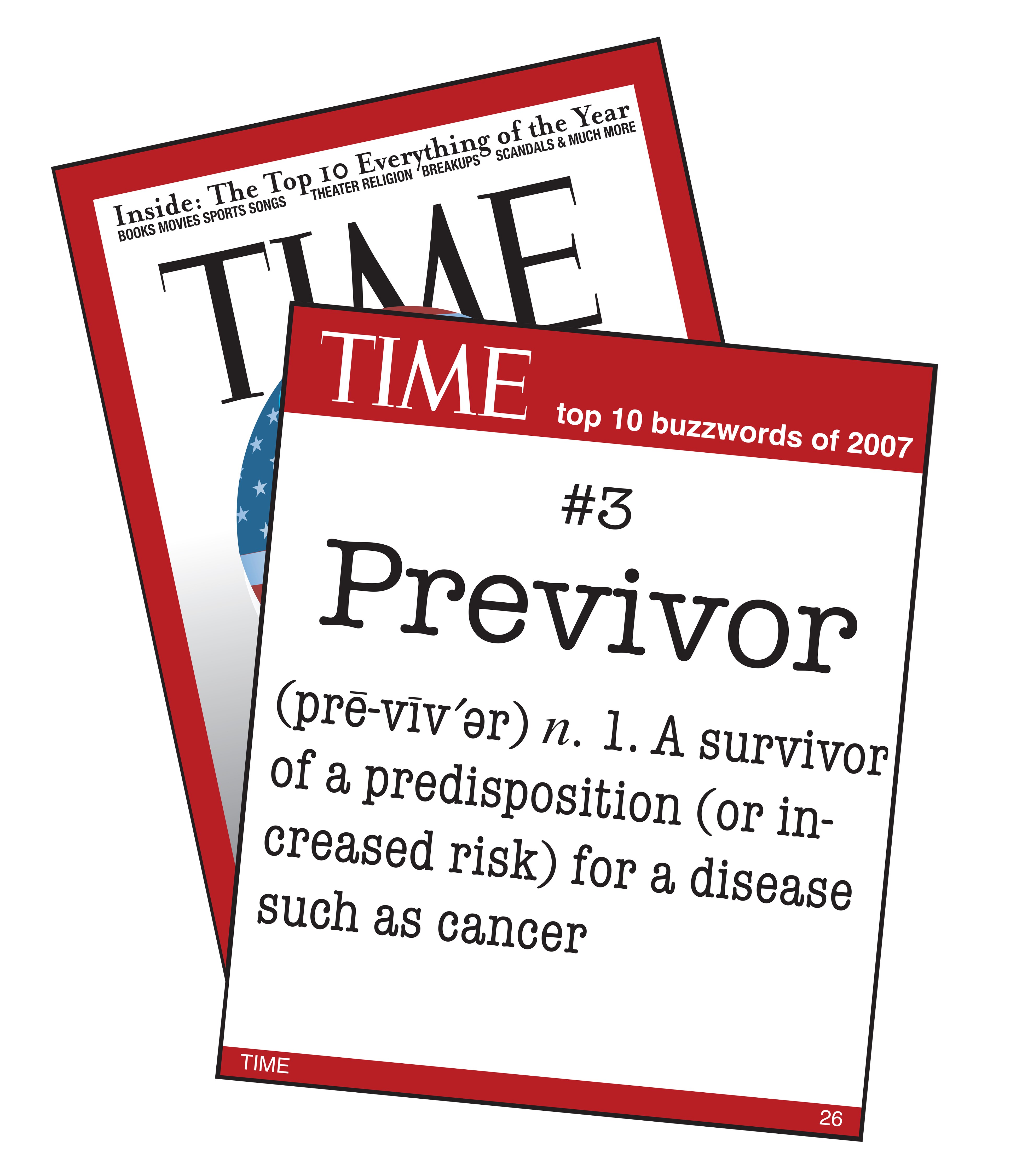
The meaning of the word "previvor" is a "survivor of a predisposition to cancer." Previvors are people living with an inherited mutation or elevated cancer risk who have never been diagnosed with cancer.
The term includes people with an inherited mutation, a family history of cancer, or some other factor that increases their risk for cancer.
What are the cancer risks for previvors?
A previvor's cancer risks vary by cancer type, lifetime risk and age of onset based on their specific gene mutation. Our gene pages provide up-to-date information on the risks and options associated with different genes linked to cancer.
What else affects previvor cancer risks?
Other factors that may play a role in cancer risk include:
- gender
- family history of cancer
- personal medical history
- lifestyle
- reproductive history
- exposure to toxins or viruses
Are there guidelines for previvors?
There are expert guidelines that outline the steps that previvors can take to manage their risk for cancer. There are separate guidelines for different genes based on the the types of cancers and the estimated level of risk. A genetics expert can help previvors understand more about the guidelines for their gene.
Looking for the latest guidelines?
FORCE provides gene-specific summaries on cancer risk, screening, prevention and treatment guidelines, and resources for individuals with inherited cancer risk.
What can previvors do to prevent cancer?
Knowing their cancer risk can help previvors take steps to prevent cancer or to detect it at its earliest and most treatable stage. Previvors have medical options to manage their cancer risks. These include:
- enhanced screening to find cancer early and at its most treatable stage.
- medications, lifestyle changes and other approaches to lowering cancer risk.
- surgery to remove organs at high risk before cancer develops.
- clinical research studies that are testing new ways to manage risk.
What are previvor surgeries?
Depending on the gene mutation and cancer risk, surgery is one option available for previvors to lower their risk for cancer. For most types of cancer, surgery is not the only option available.

|
Type of Cancer |
Type of Surgery |
Additional Information |
|
Breast cancer |
Mastectomy |
Guidelines vary by gene. Experts recommend discussing benefits, risks, costs and limitations of surgery with a breast surgeon to make an informed decision about surgery. Increased surveillance with annual breast MRI and mammogram can often detect cancer at its earliest and most treatable stage. |
|
Endometrial cancer |
Hysterectomy |
Guidelines vary by gene. Experts recommend discussing benefits, risks, costs and limitations of surgery with a gynecologic surgeon to make an informed decision about surgery. Other options for managing endometrial cancer risk include screening and medication. All individuals at high risk for endometrial cancer should become familiar with endometrial cancer symptoms. The most common symptom is abnormal or post-menopausal vaginal bleeding. |
|
Ovarian cancer |
Salpingo-oophorectomy (removal of the ovaries and fallopian tubes) |
Guidelines vary by gene. Surgical removal of the ovaries and fallopian tubes can increase survival in people with mutations. There is no reliable early detection for ovarian cancer. For this reason, most high-risk individuals are recommended to have surgery to remove their ovaries and tubes. Medications may lower the risk for ovarian cancer by about 50%. All individuals at high risk should become familiar with ovarian cancer symptoms and report these to their doctor. |
|
Ovarian cancer |
Salpingectomy (removal of the fallopian tubes only) |
Experts believe that most ovarian cancers begin in the fallopian tubes. Researchers are studying whether the removal of the fallopian tubes only and delaying oophorectomy until closer to the age of natural menopause is a safe option for lowering risk in people who are not ready to remove their ovaries. At this time, it is not known how effective salpingectomy is for lowering the ovarian cancer risk in high-risk people. For this reason, people who choose to have a salpingectomy are recommended to have a second surgery to remove their ovaries at the age listed in the guidelines for their gene. |
|
Colorectal cancer |
Colectomy (removal of the colon) Proctocolectomy (removal of the colon and rectum) |
Risk-reducing removal of the colon and rectum is recommended for people with a very high risk for colorectal cancer which cannot be managed through colonoscopy and polyp removal alone. Recommendations vary by gene. Most people at high risk for colorectal cancer can be managed with frequent colonoscopy. Aspirin has been shown to lower the risk for colorectal cancer in high-risk people. |
|
Gastric cancer |
Gastrectomy (removal of the stomach) |
Risk-reducing removal of the stomach is recommended for people with a very high risk for hereditary diffuse stomach cancer that cannot be managed by endoscopy and stomach biopsy alone. Most people at high risk for other types of gastric cancer can be managed with frequent screening alone. |
How do previvors find specialized care?
Specialized care for previvors depends on their gene mutation and cancer risks. Many of the larger cancer centers have prevention clinics with experts who specialize in genetics and cancer prevention all under one roof. Visit our section on finding experts to locate specialists in your area.
Where can previvors get support?
FORCE has many support programs specifically designed for previvors.
- Visit our calendar page for the list and time of dedicated support meetings for previvors.
- Our peer navigation program will connect you one-on-one with a trained volunteer who shares your same mutation and situation.
- Our private Facebook Group and our message boards allow you to post 24/7 and meet other previvors who share your situation and can answer your questions.
More Previvor Resources
Enroll in Prevention Research
Search for detection and prevention studies enrolling previvors.
When is Previvor Day?
Previvor Day is the last Wednesday of September or the first Wednesday of October.
Read Previvor Stories

Living with Two Mutations: A Survivor and Previvor Reflect on Hereditary Cancer Risk
Two different paths lead to a shared commitment to awareness, screening, prevention and survivorship. by Debbie Denardi and Sara Kavanaugh Most people who learn they carry a hereditary cancer mutation spend time adjusting to the idea of living...

Previvor Decisions: Losing the Ability to Breastfeed
by Cori Berg Finding out I carry a BRCA2 gene mutation that greatly increases my risk for breast cancer, I made the decision to have a prophylactic bilateral mastectomy. I recognize others have walked different paths with their breasts—fought...
Genetic Testing: A Key to Men’s Cancer Prevention
For most of my life, I thought cancer prevention for men was straightforward: don’t smoke, eat a healthy diet and exercise, reduce stress and sun exposure, and get regular medical checkups. I assumed genetic testing for inherited cancer risk was...