Melanoma Early Detection and Prevention
Can you prevent melanoma?
There are steps that people can take to lower their risk for melanoma, including.
- Use sunscreen when you are outside.
- Try not to spend too much time in the sun, and avoid getting sunburned.
- Wear clothes that cover your skin, like long sleeves and pants. A wide , including covering arms and legs, wearing a wide-brimmed hat and sunglasses.
- avoiding tanning beds.
It's not possible to completely prevent melanoma, especially for people who are at higher risk. That’s why experts recommend that high-risk people follow screening guidelines.
What is melanoma screening?
Screening for melanoma uses tests to try to catch cancer in its early stages, when it is most treatable.
How do you screen for melanoma?
The following types of screening may be recommended for people at high risk for melanoma:
- Skin self exams involve a person checking their own skin on a monthly basis to look for changes or abnormalities. Experts recommend training high risk people to perform exams.
- Watch moles closely for any signs of change in shape, size, or color.
- Dermatologists may take pictures of the skin and moles, known as mole mapping, or full body photography.
- Dermatologists examination of moles with a hand-held device known as a dermatoscope.
- Ophthalmologic examinations to check for melanoma in the eye.
What are the signs of melanoma?
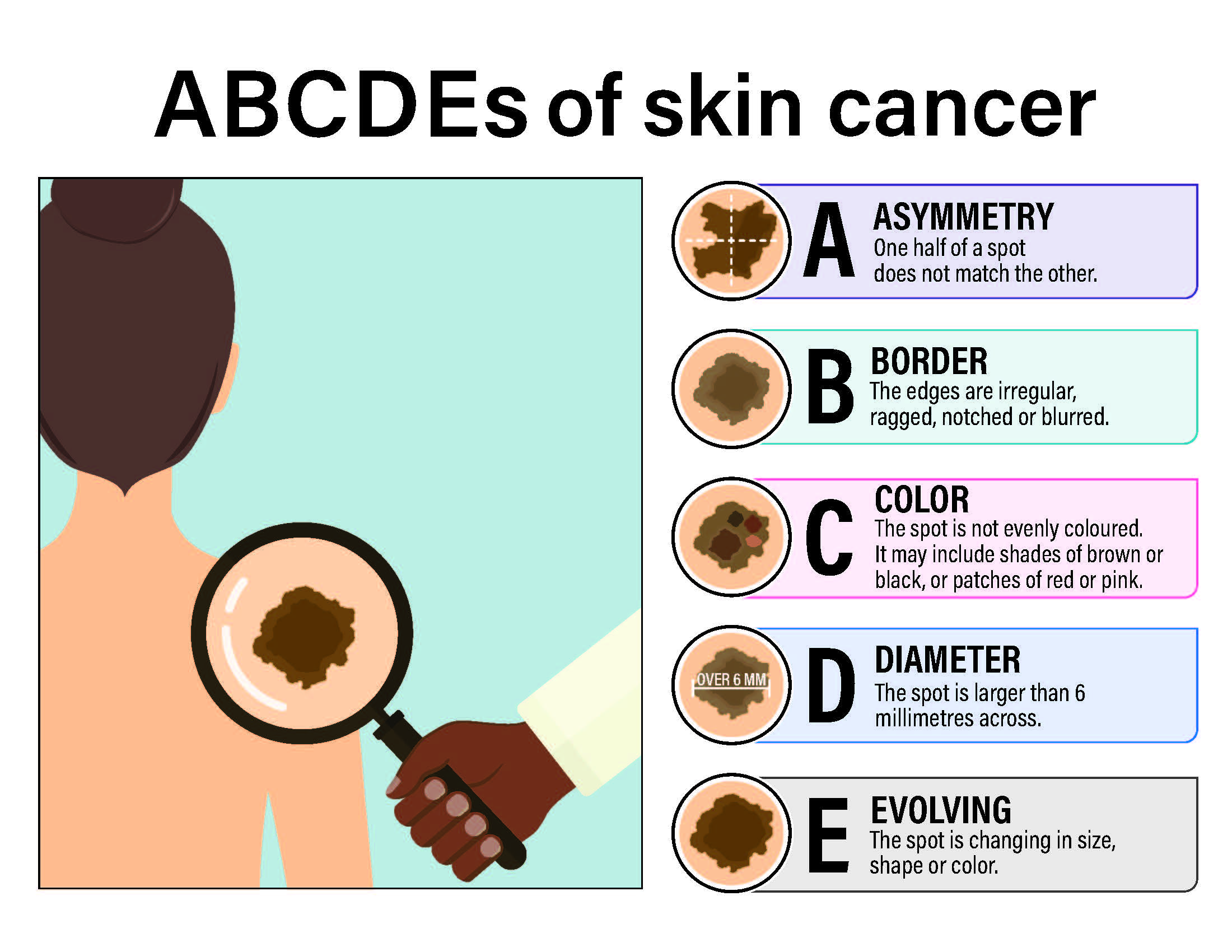
In addition to screening, it's important for people to know how to identify a suspicious mole. To help you remember the signs of melanoma and identify suspicious moles, use the ABCDE rule.
- Asymmetry
- Borders that are irregular
- multiple Colors
- Diameter of over 6 millimeter
- Evolving or changing in size, shape or color
You should report any suspicious moles to your doctor.
Get notified when updated information becomes available.
SIGN UP FOR CONTENT UPDATES

|
Gene |
Recommendation |
|
|
|
|
|
|
|
|
|
Source: Lalloo, F., Kulkarni, A., Chau, C. et al. Clinical practice guidelines for the diagnosis and surveillance of BAP1 tumour predisposition syndrome. Eur J Hum Genet 31, 1261–1269 (2023). https://doi.org/10.1038/s41431-023-01448-z; Source: NCCN Guidelines: Genetic/Familial High-Risk Assessment: Breast, Ovarian, Pancreatic, vs. 2 2025. |
|
Find a Dermatologist
The American Academy of Dermatology has a tool to find dermatologists by expertise, location or procedure.
NCCN Patient Guidelines for Melanoma
The National Comprehensive Cancer Network has patient guidelines to help people diagnosed with melanoma make informed decisions.
AIM at Melanoma Foundation
FORCE partner, AIM at Melanoma Foundation has detailed information to help people understand their diagnosis and treatment options.